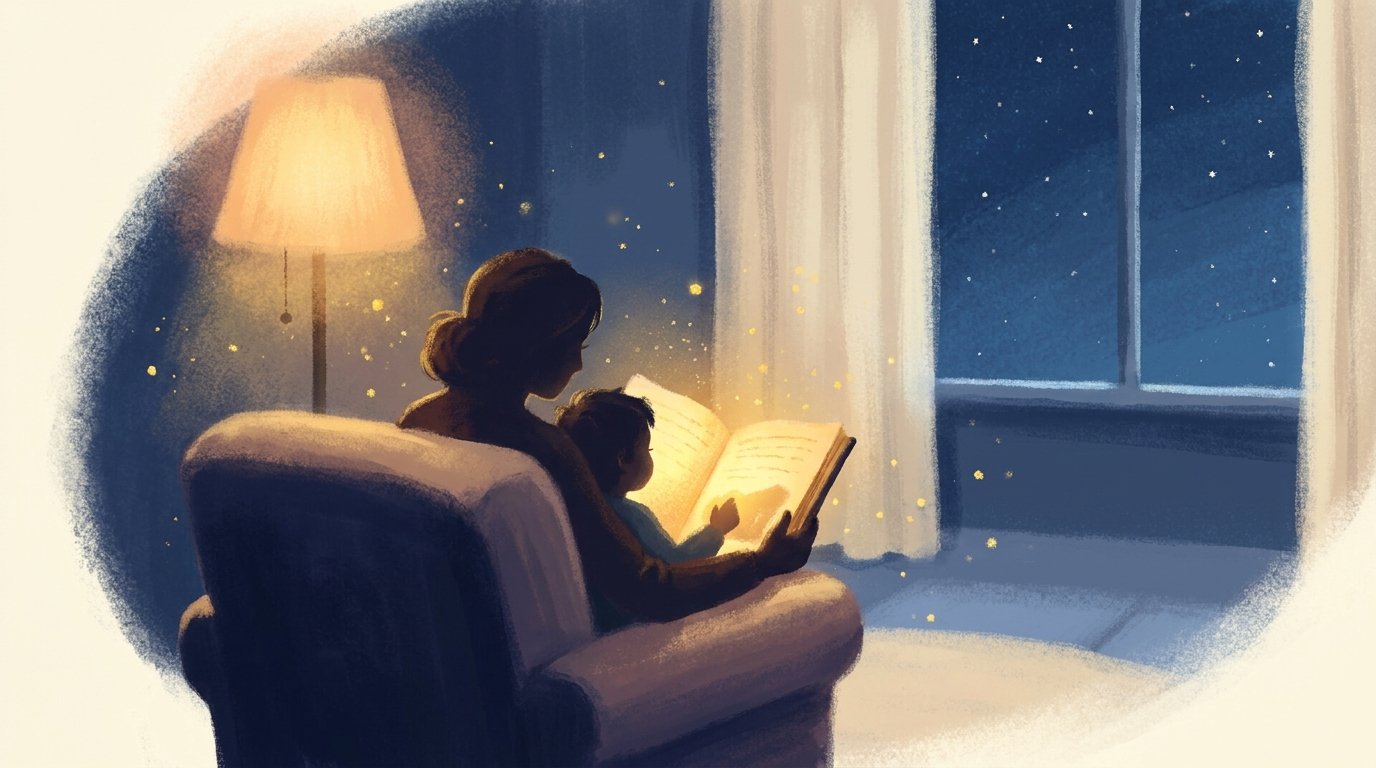
A School-Night Bedtime Routine for Busy Parents
A simple, repeatable wind-down for working parents, Sunday through Thursday. Protect sleep, keep it short, and make it easy on the hardest nights.
By Julie, a longtime high school English teacher and Lampling's founder · 4 min read

Start With the Wake-Up Time
Here is a trick I shared with parents for years. Do not plan bedtime first. Plan it backward from the morning.
Pick the time your child has to wake up for school. Then count back the hours of sleep they need. Younger kids in grade school need more sleep than older ones. Your child's doctor can tell you a good range for their age.
That math gives you a target bedtime. Now you know the real finish line. Lights out by then, on most nights, is the goal. Everything else in the evening points to that one time.
Keep the Ritual Short and the Same
A school-night routine works best when it is short. Tired parents and tired kids do not need a long list of steps. Three or four steps is plenty.
A simple order works well. Bath or wash up. Pajamas and teeth. One story. Lights out. Do the same steps in the same order every night.
Sameness is the point. When the steps never change, your child's body learns what comes next. The routine itself starts to make them sleepy. You are not nagging anymore. The order does the work for you.
Why Consistency Helps So Much
Children feel safe when they know what to expect. A steady bedtime routine tells them the day is ending and they are cared for. That calm feeling helps them settle and fall asleep.
Consistency also protects sleep over the whole week. When bedtime drifts later each night, mornings get harder by Friday. A steady schedule keeps your child rested for learning, focus, and a better mood.
You do not have to be perfect. Aim for the same routine most nights, Sunday through Thursday. Close enough, most of the time, is what builds the habit.
Make Story Time the Anchor
Reading aloud is one of the best things you can do at bedtime. Experts who study how children learn to read agree on this. Daily read-aloud time helps grow vocabulary, listening skills, and a love of stories. Groups like Reading Rockets point to it again and again.
Reading aloud also fits beautifully into a calm routine. Your voice is soothing. The closeness feels safe. And it gives your child something to look forward to, which makes the whole wind-down easier.
One short story is enough. You do not need to teach or quiz. Just read, snuggle, and enjoy it together. The learning happens on its own.
Turn Off Screens Before Bed
Screens and sleep do not mix well right before bed. Pediatricians, including the American Academy of Pediatrics, suggest keeping screens away from kids in the last hour before sleep.
There are two reasons. The bright light can make it harder for the body to feel sleepy. And shows, games, and videos wind kids up when you want them winding down.
A screen-free wind-down does not have to be a fight. Trade the screen for the story. When a book becomes the last thing before lights out, the screen is not the prize anymore. The story is.
Make It Easy on the Hardest Nights
Some weeknights fall apart. You get home late. Homework runs long. Everyone is cranky. Plan for those nights now, before they happen.
Keep a short version of the routine ready. On a rough night, skip the bath and do just two steps. Quick teeth, one story, lights out. A shorter routine is far better than no routine.
Lower the bar so you can keep the streak going. The goal is not a perfect evening. The goal is a calm, steady ending your child can count on, even when the day was a mess. This is part of why some families lean on Lampling for the story, so one warm step is always handled.
Questions parents ask
What is a good school-night bedtime for kids?+
Work backward from the wake-up time. Count back the hours of sleep your child needs for their age, and that gives you the bedtime. Ask your child's doctor for a good sleep range if you are not sure.
How do I keep a bedtime routine when I work late?+
Keep the routine short and the same. Three or four steps is plenty. On late nights, use a quick version with just teeth, one story, and lights out. A short routine beats no routine.
Why should screens go off before bed?+
Pediatricians suggest no screens in the last hour before sleep. Bright light makes it harder to feel sleepy, and shows and games wind kids up. Trade the screen for a story instead.