Why Reading Aloud to Your Child Matters
A warm, practical look at what your child gains when you read aloud, plus simple ways to make it a nightly habit that sticks.
By Julie, a longtime high school English teacher and Lampling's founder · 4 min read
The Simple Habit Experts Agree On
Hello, I'm Julie. I taught high school English to hundreds of kids before starting Lampling. In all those years, one piece of advice stayed the same. Read aloud to your child every day.
This is not just a nice idea. Reading experts who study the Science of Reading point to the same truth. Children who hear stories grow into stronger readers.
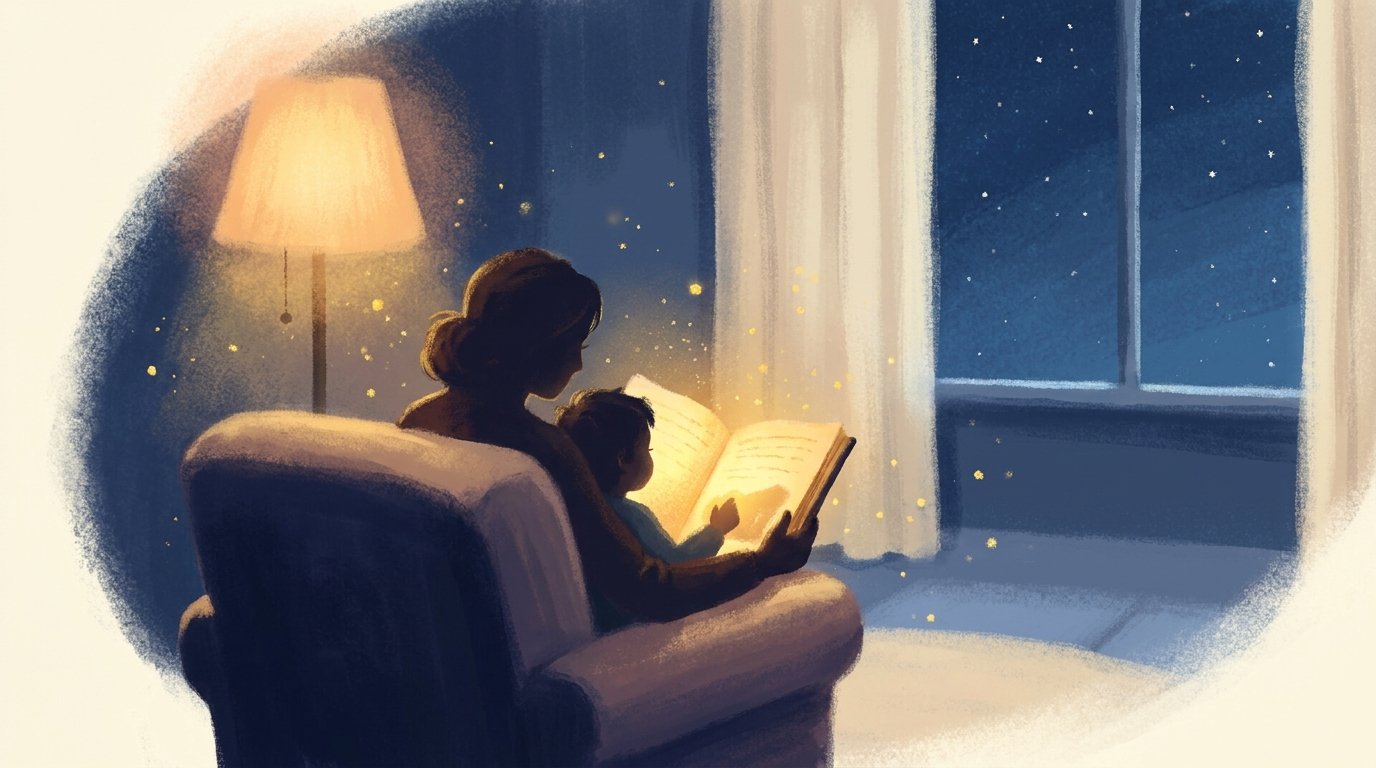
The best part is how simple it is. You do not need special training. You just need a book, a few quiet minutes, and your own voice.
A tired parent can do this. That is what I love about it.
What Your Child Gains
When you read aloud, your child hears words they would not hear in everyday talk. This builds a bigger vocabulary, and vocabulary is one of the five key parts of learning to read.
They also build listening and comprehension. Your child learns to follow a story, picture it, and guess what comes next. These thinking skills carry over into their own reading later.
There is a gift that is harder to measure. Sitting close while you read tells your child they are safe and loved. That bond matters as much as any word on the page.
And slowly, story by story, your child learns that books are a warm place to be. That love of reading can last a whole life.
Reading to Them vs. Hearing Them Read
Once a child starts to read, many parents stop reading aloud. I understand why. It feels like the job is done. But please keep going.
When a child reads to you, they work hard to sound out words. That work is good and important. Yet it takes so much effort that they have little energy left to enjoy the story.
When you read to them, you carry that load. You can use harder books with bigger ideas and richer words. Your child gets to relax and simply listen, picture, and feel.
Both kinds of reading help. They just help in different ways. The best plan is to do both, not to trade one for the other.
Making It a Daily Ritual
Children feel safe when they know what comes next. A warm, steady routine is calming, and bedtime is a natural fit for reading.
Pick a regular time and a cozy spot. Keep it short if you need to. Even ten quiet minutes counts, and a small habit you keep beats a big one you drop.
Try to keep screens out of the wind-down time. Pediatric guidance, including advice from the American Academy of Pediatrics, suggests keeping screens away from kids right before bed so they settle more easily.
A story that is screen-free for the child is part of why we built Lampling. It gives families a fresh tale on the nights they choose, with no screen in front of your child at bedtime (you read from your phone).
It Still Helps Older Kids
Reading aloud is not just for toddlers. Older children gain a lot from it too, even after they read well on their own.
With an older child, you can choose longer books and stop to talk. Ask what they think a character should do. Wonder out loud together. This builds deeper comprehension.
These quiet moments also keep you close during years when kids start to pull away. A shared story gives you an easy, gentle way to connect.
So if your child is seven, ten, or twelve, it is not too late. Pick a book you will both enjoy and start tonight.
When to Ask for a Little Help
Every child grows at their own pace. Some take longer to warm up to reading, and that is normal. Stay calm and keep the read-aloud time happy, never stressful.
If reading feels very hard for your child for a long stretch, it is okay to ask questions. Trusted groups like Reading Rockets and the International Dyslexia Association offer kind, clear information for parents.
You do not need to label anything yourself. A teacher or doctor can listen to your worries and guide you to the right next step.
Until then, keep doing the one thing that helps almost every child. Open a book, snuggle in, and read.
Questions parents ask
How long should I read aloud each day?+
There is no perfect number. Even ten quiet minutes a day helps. A short habit you keep up matters more than a long one you stop. Read as long as your child stays happy and interested.
My child can read on their own now. Should I still read to them?+
Yes. When you read to them, you can use harder, richer books while they relax and enjoy the story. Reading on their own and being read to both help, in different ways. Try to keep doing both.
Is reading aloud still useful for older kids?+
It is. Older children gain new vocabulary and deeper comprehension when you read longer books and talk about them. It also keeps you close during the busy school years. It is never too late to start.