How to Build a Screen-Free Bedtime Routine
A calm, simple plan from a longtime teacher for winding kids down at night. Why screens make sleep harder, and the gentle steps that help your child feel safe and ready to rest.
By Julie, a longtime high school English teacher and Lampling's founder · 4 min read

Why Screens Make Bedtime Harder
Hi, I am Julie. I taught high school English for many years, and between my students' parents and my own kids, bedtime came up a lot. The most common worry was screens.
Screens are made to hold attention. Games, shows, and videos give a quick reward over and over. That keeps a child's mind busy and awake at the very moment you want it to slow down.
The bright light from a screen can also tell the brain that it is still daytime. The American Academy of Pediatrics suggests keeping screens away from kids in the hour before bed for this reason.
This is not about doing it perfectly. It is just about giving your child's brain a chance to settle. A calm body and a quiet mind fall asleep more easily than a busy one.
Start With a Set Bedtime
A bedtime routine works best when it happens at about the same time each night. Children feel safe when they know what comes next.
Pick a bedtime that fits your family and try to keep it steady on school nights. The exact time matters less than keeping it close from night to night.
When the body gets used to a rhythm, it starts to feel sleepy near that hour on its own. That makes the whole night smoother for everyone.
If your current bedtime is far from where you want it, move it earlier slowly. Ten or fifteen minutes every few nights is gentle and easy to keep up.
Dim the Lights and Slow the Pace
About thirty minutes before bed, start turning down the lights around the house. Lower light is a quiet signal that the day is ending.
Turn off the TV and put phones and tablets in another room. The goal is no screens for your child during this wind-down time.
Keep the mood calm. Use soft voices, slower movements, and quiet activities. Loud or fast play right before bed can rev a child back up.
This slow pace does the heavy lifting. It tells your child, without any words, that it is time to rest.
Bath, Pajamas, and a Few Simple Steps
A short list of steps, done in the same order, becomes a routine your child can count on. Same steps, same order, most nights.
A warm bath is a nice start if you have time. The warm water relaxes the body, and stepping out into cooler air helps a child feel sleepy.
Then move to pajamas, brushing teeth, and using the bathroom. Keeping the order the same each night helps your child know the end is near.
Young children love to feel in charge. Letting them pick the pajamas or hold the toothbrush keeps things calm and avoids a fight.
End With a Calm Story Read Aloud
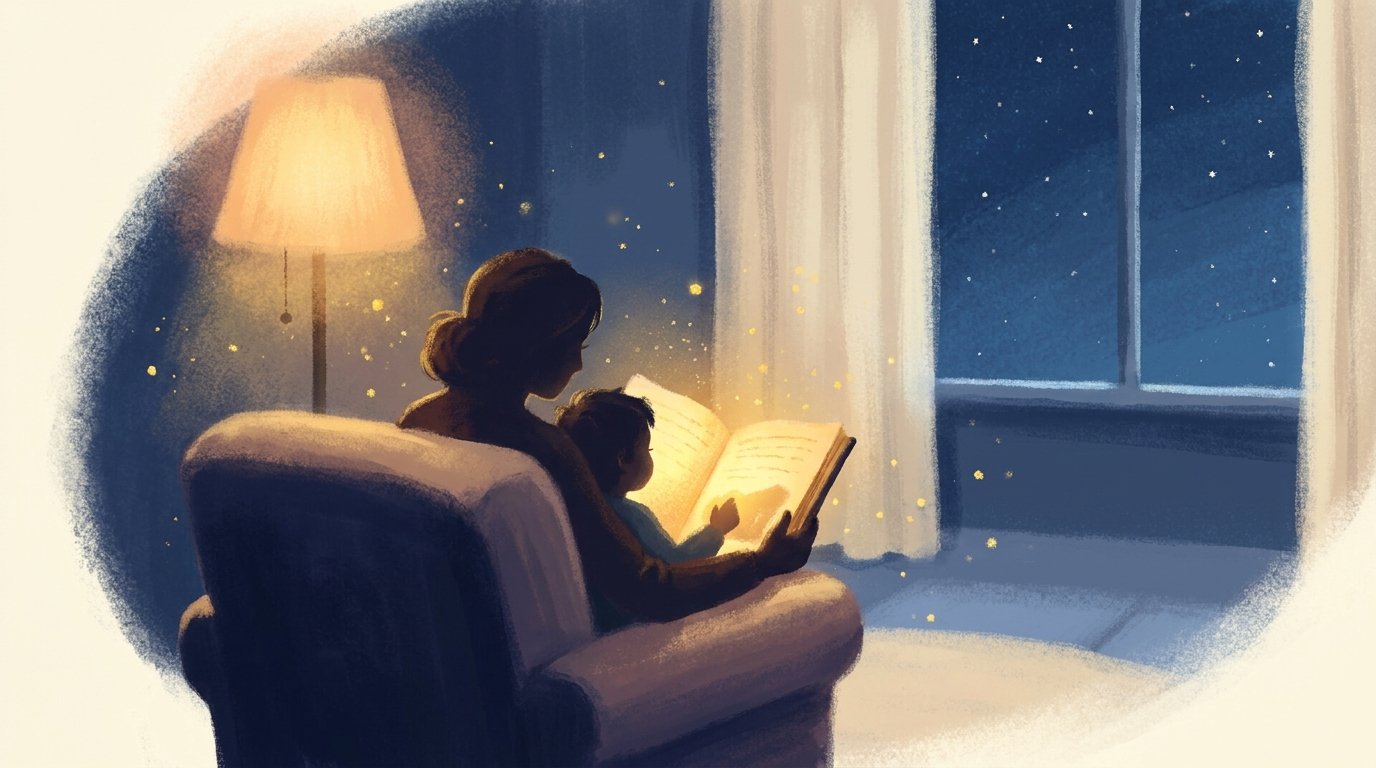
The last step is my favorite: a story, read aloud, with no screen for your child. This is the warm, quiet ending that helps a child drift off.
Reading aloud every day is one of the best things you can do for your child. Experts across the Science of Reading agree it grows vocabulary, comprehension, and a love of books.
When you read aloud, your child hears new words and how sentences sound. Over time this quietly supports the skills behind learning to read.
You do not need to perform. A steady, gentle voice is plenty. Cuddle close, read a little slowly, and let the story carry you both to the end of the day.
This is the heart of what we do at Lampling, a fresh story to read aloud on the nights you choose. But any good book works. The gift is the time together.
Be Patient and Keep It Gentle
A new routine takes time to settle. Most children need a week or two of the same steps before it starts to feel natural.
Some nights will go sideways. A late event, a cold, or a big feeling can throw things off, and that is completely normal.
When that happens, just return to the routine the next night. Showing up again is what builds the habit, not getting it right every time.
If sleep stays hard for a long while, or your child seems very tired during the day, it is worth a friendly chat with your child's teacher or doctor. They can help you look at the whole picture.
Questions parents ask
How long before bed should screens go off?+
Aim to turn screens off about an hour before your child's bedtime. The American Academy of Pediatrics suggests keeping screens away from kids right before bed, since the light and fast pace can make it harder to wind down. If a full hour is hard, even thirty quiet minutes helps.
What if my child fights the new routine?+
This is normal, especially at first. Keep the steps short and the same each night, and give small choices like which pajamas to wear. Stay calm and patient. Most children settle into a steady routine after a week or two of gentle repetition.
Does reading aloud at bedtime really help my child?+
Yes. Reading aloud every day is widely recommended by educators and pediatricians. It builds vocabulary and comprehension, and it grows a love of books. Just as important, it is a warm, calm way to end the day together, which helps your child feel safe and ready for sleep.